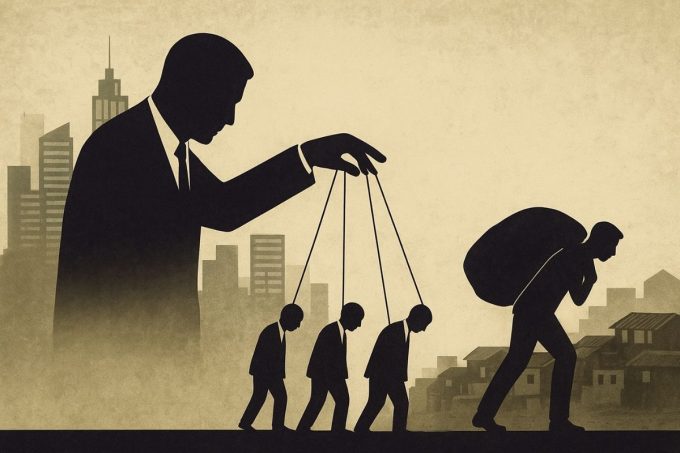

The world politics is moving towards a very worse phase of neo-colonialism where rich nations are plundering the resources of third world countries but returning very poorly to these nations which are already facing problems of inequitable distribution of wealth. The Millennium Development Goals which were later aligned to Sustainable Development Goals are also off the target with setback in the global poverty reduction efforts. Agreed, due to Covid 19 in 2020 these efforts received a blow and also overall the growth trajectory and development efforts came to the alarming level.
Rich nations treating the developing nations just as market: This is what world economy has been facing for last three-four centuries. The developed world has been the importer of raw material such as coffee, cotton and food grains etc while they export the finished products. In the present time the developed nations have been denying state of the art technology to the third world countries which ensure their dominance in trade.
In fact technology transfer is the key aspect for achieving the Sustainable Development Goals (SDGs) by sharing innovations, skills, and knowledge (like clean energy, digital tools, agri-tech) from developed to developing nations but this faces a tough barrier from rich nations under the guise of protecting the intellectual property rights (IPRs), wide digital and finance divide and shaping their foreign policy which suits their commercial and strategic interest.
Also Read:- Stages in Seeking the Divine: Who, How, Why, and beyond
The wars which serve the interest of powerful nations: Whether it is US or Russia or China and other powerful blocs such as Western Europe. Wars are a mean to grab bigger share of the natural resources in hostile countries either through usurping power or encouraging a puppet government. Here the prejudice of developed and powerful nations are clearly visible.
Here is an example of prejudiced nationalism. Rich nations such as USA can talk to the present government in Syria but not Afghanistan as the former could serve their interest well in keeping away former dictator Bashar al-Assad. The Syrian President Ahmad al-Sharaa who is former Al Qaeda fighter could be a US state guest but Afghanistan remains a pariah. In Afghanistan the Taliban is not ready to toe the US line so all efforts are made to seclude it. Here no distinction can be made between Syria or Afghanistan. While they both must be politically discouraged but for humanitarian efforts both governments can be treated on equal footing to ameliorate the social and financial condition of the underprivileged people. Both nations have suffered a lot on account of mindless destruction due to long wars. The selective preferential treatment can legitimise the violence and put the efforts to achieve the targets of SDGs off track.
Lack of unity among less developed nations: These nations have been acting like peripheral centres often joining one group or the other for their parochial national interests. As the world stands divided due to an emerging bi-polar world with power gravitating around USA and China. As the China is rising it is causing a power struggle. It not only has trade dispute with neighbours including Vietnam, and the Philippines, from South China Sea in Pacific Ocean to the Indian Ocean.
Also Read:- Corporate Moral Corruption….But is anyone listening
In 2013, the Philippines initiated an arbitration case against China under UNCLOS. The Permanent Court of Arbitration (PCA) in The Hague issued a landmark ruling on July 12, 2016, in favour of the Philippines. The tribunal concluded there was no legal basis for China’s claim of historic rights to the maritime areas within the nine-dash line under UNCLOS. However, China in its full contempt of the order rejected it. Such measures will only worsen the geopolitical situation but will erode the credibility of neutral organizations.
While on the hand the other Superpower USA is adamantly increasing unexpectedly high tariffs on developing nations. Its competitors like China are able to negotiate with it due to their bargaining position. Chinese gambit of tit for tat is working fine for them, while the rest of the world is not able to do so. These differences have huge impact on the SDGs which needs cohesion and concentrated efforts to alleviate world of poverty and hunger. Here the smaller nations must understand that only when they unite their bargaining position will rise.
Also Read:- India-China resetting ties amid global tensions
Way forward for Developing world: The developing nations must have higher representation and saying in the United Nations. Over 50 UN members including Afghanistan, Myanmar, Maldives, Bhutan, Cambodia and Nepal have never become a member of United Nations Security Council non-permanent members. Their high and frequent representation to UNSC will lend them a strong voice and also inspire the other developing nations.
Also, the developing nations should be given high representation and must be accommodated in the UNSC expansion. In the regional trade bodies they should be treated as equally valuable partners. Here, though a start was made with entry of African Union to G 20 during India’s Presidency in 2023.
But path is long and time for achieving the SDGs is short, under this scenario the developing nations must come together to become a one strong voice so they can be heard by developed world.