

Historic Cultural Agreement as the Foundation
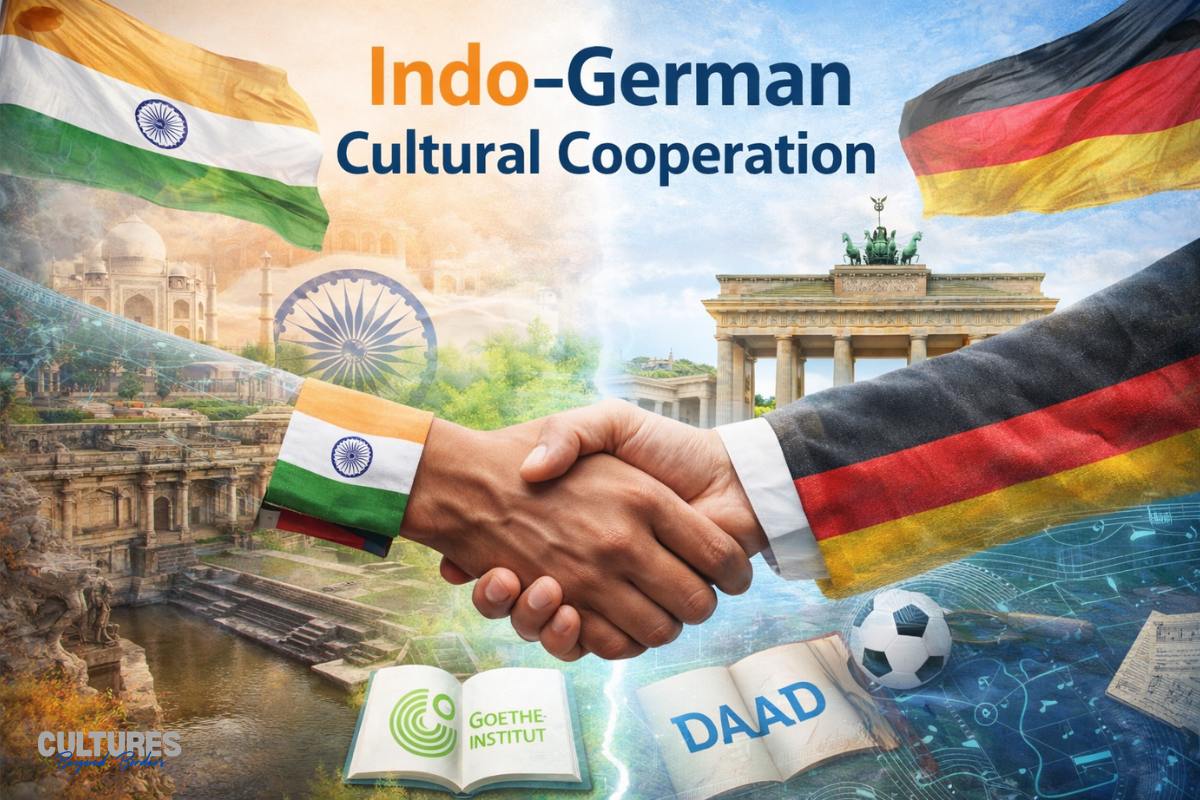
The cultural partnership between India and Germany is rooted in the Cultural Agreement between the Federal Republic of Germany and India, which came into force in September 1969. The agreement established the framework for cooperation in culture and education and has since enabled a vibrant exchange of ideas, knowledge, and traditions between the two countries.
Over the decades, this institutional framework has evolved into a dynamic partnership encompassing museums, language education, academic exchange, cultural heritage preservation, and youth engagement.
Museum Cooperation and Cultural Heritage Preservation
A major milestone in recent years was the Memorandum of Understanding on Museum Cooperation, signed in 2019 during the 5th Indo-German Intergovernmental Consultations. The agreement aims to deepen collaboration between leading museums and cultural institutions in both countries.
Indian institutions such as the National Museum in New Delhi, the National Gallery of Modern Art, and the Indian Museum in Kolkata are collaborating with renowned German institutions, including the Prussian Cultural Heritage Foundation and the Humboldt Forum. These partnerships focus on joint exhibitions, research initiatives, digitisation projects, and long-term institutional cooperation.
Also Read:- Global Dance Overture Strengthens India–Russia People-to-People Bonds
Germany has also supported the conservation of India’s cultural heritage through the Cultural Preservation Programme of the German Federal Foreign Office. Restoration projects carried out in recent years include the conservation of a 16th-century stepwell at Humayun’s Tomb complex in New Delhi, the restoration of wall paintings in a Buddhist monastery in Ladakh, and preservation work on the historic Oont Kadal Bridge in Srinagar.
Goethe-Institut Network and Cultural Outreach
Germany’s cultural presence in India is prominently represented by the Goethe-Institut, known locally as Max Mueller Bhavan (MMB), named after the eminent German Indologist Max Mueller (1823–1900). These institutes promote German language learning, cultural programmes and educational exchanges.
Six Goethe-Instituts operate in New Delhi, Kolkata, Chennai, Bengaluru, Mumbai, and Pune, with the institute in New Delhi serving as the regional centre for South Asia. The network is further strengthened by Goethe Centres in Ahmedabad, Chandigarh, Coimbatore, Hyderabad, and Thiruvananthapuram, which organise cultural events and language programmes across India.
Growing Interest in German Language Education
The demand for German language education in India has been steadily rising. A major initiative supporting this trend is the PASCH programme (“Schools: Partners for the Future”), launched by the German Federal Foreign Office in 2008 to create a global network of schools offering German language programmes.
In India, 52 schools, including two German schools, are part of the PASCH network. Around 50 Indian schools offer German as a foreign language, with more than 15,000 students currently studying the language.
The Goethe-Institut also works closely with Indian educational institutions. Its partnership with the Kendriya Vidyalaya Sangathan (KVS) introduced German language teaching in several central government schools. Building on this success, similar programmes were extended to the Jawahar Navodaya Vidyalayas (JNVs), which operate over 650 schools across India. Additionally, German language courses are offered in many schools under the “Bildungskooperation Deutsch” initiative.
Academic Exchanges and Higher Education Cooperation
Academic collaboration remains a cornerstone of Indo-German relations. The German Academic Exchange Service (DAAD) maintains a branch office in New Delhi that promotes higher education partnerships, research cooperation, and scholarship programmes.
Currently, around 20,800 Indian students are studying in German universities, reflecting the increasing popularity of Germany as a destination for higher education. Since 2009, DAAD has supported academic mobility through the initiative “A New Passage to India,” which encourages research exchange and institutional collaboration.
At the school level, the Pedagogical Exchange Service (PAD) offers the International Scholarship Programme, selecting around 500 students from nearly 90 countries every year for study visits to Germany based on their proficiency in the German language. Indian students regularly participate in this programme.
German-style schooling in India further strengthens educational ties. The German School New Delhi (DSND) provides education from kindergarten to the Abitur, the German school-leaving certificate, while the DSB International School in Mumbai offers a bilingual curriculum combining German and international education systems.
Arts, Music and Cultural Exchange
Beyond education, cultural engagement between India and Germany thrives through artistic collaborations and music tours. The German Embassy in New Delhi regularly invites German artists to perform in India, introducing Indian audiences to contemporary German music and creative expressions.
Recent tours have featured artists such as Berlin-based DJ Meggy, reggae vocalist Sara Logo, and the German jazz band Working Title, who performed in several Indian cities and showcased the diversity of Germany’s music scene.
Sports Diplomacy and Youth Engagement
Sports have also emerged as an important channel for strengthening people-to-people connections. Football, Germany’s most popular sport, has seen increasing popularity in India, especially after the successful hosting of the FIFA Under-17 World Cup in 2017.
Germany supports youth development programmes through sports diplomacy initiatives such as “Kick for Tolerance,” funded by the German Foreign Office. Implemented in Rurka Kalan, Punjab, the programme uses football training sessions to promote values such as education, hygiene, and gender equality among young participants.
Also Read:- India–Israel FTA Talks Gain Momentum
In 2019, the German Embassy, in collaboration with German missions in Colombo, Chennai, and Bengaluru, invited professional football trainer Ms. Mehlbaum-Stähler to conduct training sessions across Colombo, Chennai, Bengaluru, Delhi, and Rurka Kalan. The programme focused on training young players—particularly girls—and conducting coaching workshops to build sustainable football training capacity.
A Partnership for the Future
Over the decades, Indo-German cultural relations have evolved into a multifaceted partnership encompassing education, cultural heritage, arts, sports, and academic collaboration. Through institutional cooperation and people-to-people exchanges, both countries continue to strengthen their commitment to cultural dialogue and mutual understanding, ensuring that the partnership remains vibrant and forward-looking.









Leave a comment