

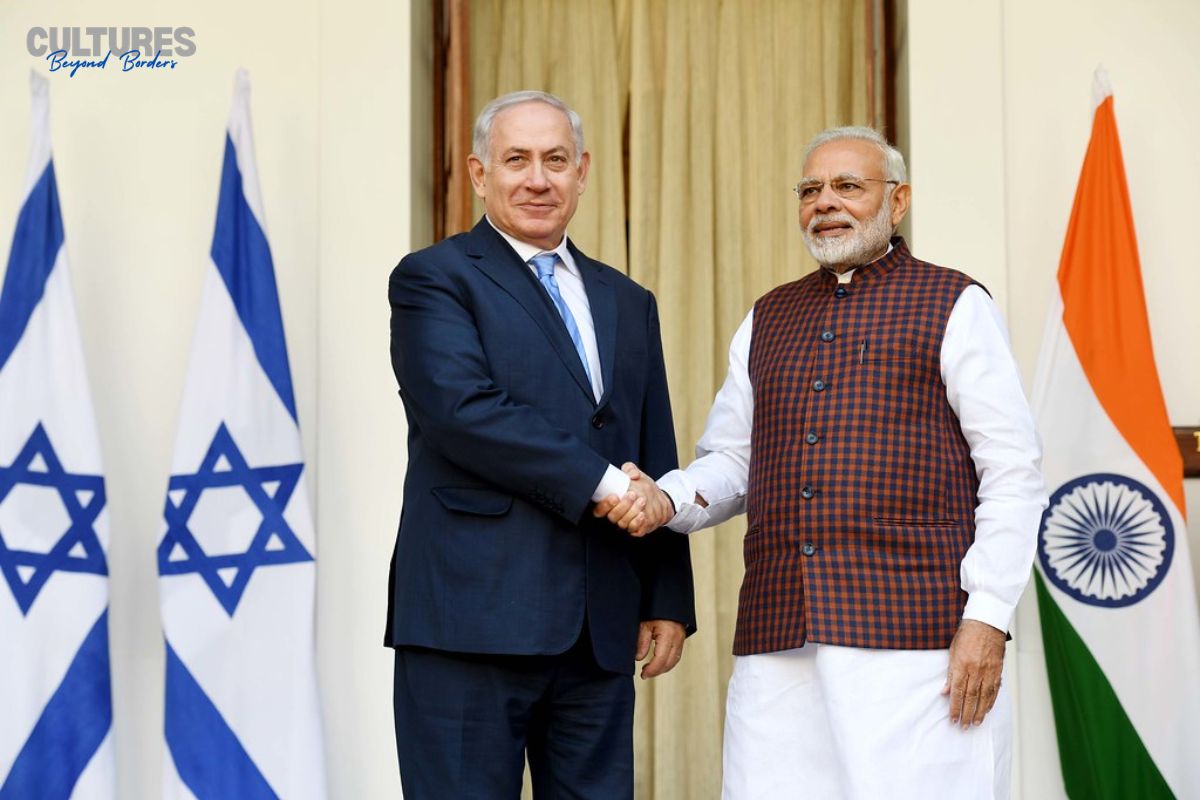
India and Israel’s strategic partnership has steadily evolved over the years, but Prime Minister Narendra Modi’s visit to Israel marks a moment of renewed focus on defence and security cooperation. On the second day of his official trip, Prime Minister Modi held bilateral talks with his Israeli counterpart, Benjamin Netanyahu, with defence collaboration high on the agenda.
India–Israel defence ties are widely regarded as one of the most robust pillars of the bilateral relationship. What began primarily as an arms import arrangement has matured into a more complex framework involving joint development, co-production, technology transfer, and innovation partnerships. At the core of this collaboration lie shared security concerns, particularly the challenge of terrorism and regional instability.
From Buyer–Seller to Strategic Co-Development
Over the last few years, the defence partnership has deepened significantly. Between 2020 and 2024, Israel accounted for 13 per cent of India’s total arms imports. Conversely, India emerged as one of Israel’s largest defence markets, accounting for 34 per cent of Israeli defence exports during the same period. These figures highlight not only the scale but also the strategic importance of the partnership for both countries.
In 2025, a new Memorandum of Understanding (MoU) was signed to facilitate the sharing of advanced technologies and promote co-development and co-production of defence equipment. This shift reflects India’s broader push for self-reliance in defence manufacturing under the “Make in India” initiative. Rather than remaining a major importer, India aims to build indigenous capabilities while leveraging foreign technological expertise.
Israel’s strength in air defence systems, intelligence, surveillance and reconnaissance (ISR) drones, counter-drone technologies, precision weaponry, and cyber capabilities makes it a valuable partner. Analysts note that the Israeli advantage lies not only in the acquisition of advanced equipment but in the integration of systems and the ability to adapt quickly under operational pressure.
Israel’s Strategic Pivot to Asia
The geopolitical context has also played a role in strengthening ties. Following the Gaza conflict, Israel has been recalibrating its economic and defence partnerships. While Europe has historically been a major market for Israeli defence exports, evolving political dynamics have prompted Israel to diversify its partnerships, particularly in Asia.
India, with its expanding defence infrastructure and ambitious modernization plans, has become a key partner in this strategic pivot. The convergence of interests—combined with high levels of political trust—has created space for deeper engagement beyond traditional procurement contracts.
One distinguishing feature of Israel’s defence exports is the relatively flexible approach to technology access. Unlike some major powers that impose restrictions on the most advanced platforms or limit technology transfer, Israel is often perceived as more open to sharing cutting-edge systems with trusted partners. This openness has enhanced India’s access to advanced technologies that support its security objectives.
Role of Private Sector and Startups
As India seeks to expand its domestic defence manufacturing capacity, the private sector is expected to play a more prominent role. While India’s public sector defence enterprises have contributed significantly to national capabilities, experts argue that the next phase of growth will require greater private sector participation.
Israel’s defence ecosystem is widely regarded as one of the most innovative and cutting-edge in the world. It is driven by a strong synergy between government agencies, private firms, and startups. This model aligns well with India’s vibrant startup culture and growing private defence industry.
Also Read:- India–Israel FTA Talks Gain Momentum
Joint ventures between Israeli companies and Indian private firms are expected to expand, particularly in high-technology sectors. Collaboration in areas such as cyber security, artificial intelligence, quantum technologies, and space capabilities is likely to gain prominence. As warfare evolves in the digital age, these emerging domains are becoming as critical as traditional platforms and weapon systems.
Changing Nature of Warfare
Security experts emphasize that while conventional warfare remains a reality, the character of conflict is changing. Cyber warfare, digital disruptions, and advanced technological capabilities are reshaping defence strategies worldwide. India and Israel both recognize the need to invest in these new domains.
The collaboration is therefore not limited to tanks, missiles, and aircraft. It increasingly encompasses cyber security frameworks, AI-driven defence applications, space-based surveillance systems, and next-generation communication technologies. The complementarity is clear: Israel contributes high-end technological innovation, while India brings scale, skilled manpower, and growing industrial capacity.
Diplomatic Facilitation and Strategic Trust
Indian diplomatic missions abroad play an important role in facilitating defence and strategic partnerships. Embassies represent the entire spectrum of government interests, including security cooperation. Given the high level of trust between India and Israel, defence collaboration has moved forward smoothly.
Officials underline that the strategic interests of the two countries converge significantly. Both face persistent security pressures and share similar concerns regarding terrorism. This alignment has strengthened the foundation of their partnership.
Strong People-to-People Connect
Beyond defence ties, the India–Israel relationship is reinforced by strong people-to-people connections. Civilizational links between the two societies stretch back over 2,000 years. In modern times, this connection has translated into a comfortable and mutually respectful partnership.
Israel is home to approximately 85,000 citizens of Indian origin, many of whom have deep cultural and familial ties to India. In recent years, especially during workforce shortages following the Gaza conflict, Israel has welcomed thousands of skilled and semi-skilled Indian workers. Many are employed in sectors such as caregiving and construction.
Indian workers in Israel often speak positively about their experiences, citing fair treatment, equal rights, and a welcoming social environment. Unlike some regions where migrant workers face restrictions, Israel is perceived as offering comparatively open and transparent employment conditions.
Additionally, hundreds of Indian students are pursuing higher education in leading Israeli institutions, further strengthening academic and innovation linkages.
Toward a New Breakthrough
Prime Minister Modi’s visit is expected to provide further impetus to this expanding partnership. As both nations navigate complex regional and global challenges, defence and security cooperation remains central to their engagement.
The transition from a buyer–seller relationship to one focused on joint production and technology co-development represents a significant milestone. With geopolitical shifts, technological transformation, and strategic convergence shaping the global order, India and Israel appear poised to elevate their defence partnership to a new level.
In a rapidly changing security landscape, their collaboration reflects not just mutual necessity but a shared vision for resilience, innovation, and long-term strategic alignment.










Leave a comment