

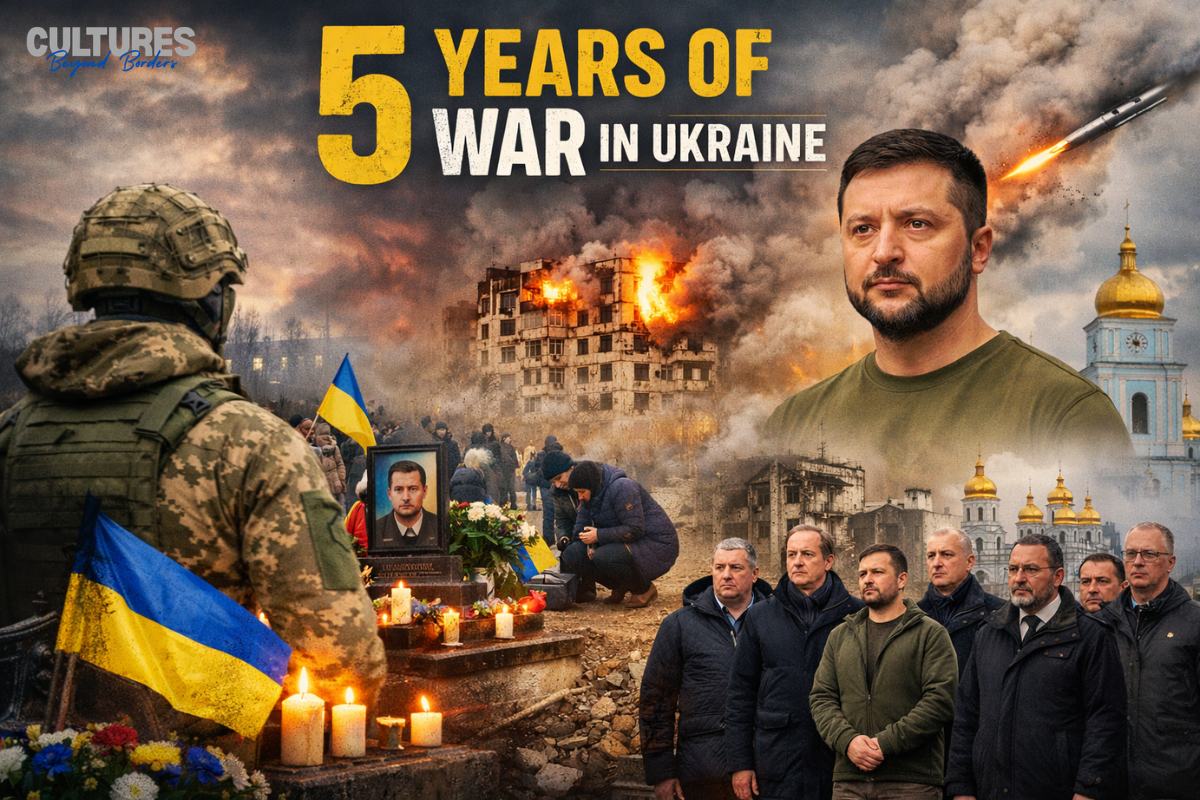
Ukraine marked the beginning of its fifth year of war in February 2022 with a nationwide moment of silence, a solemn reminder of the immense human cost of the conflict that continues to shape every aspect of life in the country.
At precisely the designated hour, citizens across Ukraine received an alert on their phones, prompting them to pause for a minute to honor those who have died since Russia launched its full-scale invasion. In the capital, Kyiv, streets fell quiet as residents reflected on the sacrifices made over four years of relentless fighting.
The commemorations come at a time when the war shows no signs of ending. Even as dignitaries gathered in Kyiv to demonstrate solidarity, Russian air strikes continued across parts of the country. In the southeastern city of Zaporizhzhia, five people—including a child—were injured in fresh attacks. Multi-story residential buildings were damaged, underscoring the persistent danger civilians face.
International Leaders Stand with Kyiv
Prime ministers and presidents from across Europe arrived in Kyiv for anniversary events, standing alongside President Volodymyr Zelensky in a show of continued support. Large sections of the capital were under tight security lockdown, making movement around the city difficult. Despite the restrictions and freezing winter conditions, many residents ventured out to lay flowers at memorial sites and cemeteries.
One of the most poignant commemorations took place in Bucha, a town that became synonymous with alleged war crimes in the early weeks of the invasion. Russian troops occupied Bucha briefly in 2022 after landing at a nearby airfield. When Ukrainian forces retook the area, images of civilian bodies lying in the streets and reports of mass graves shocked the international community.
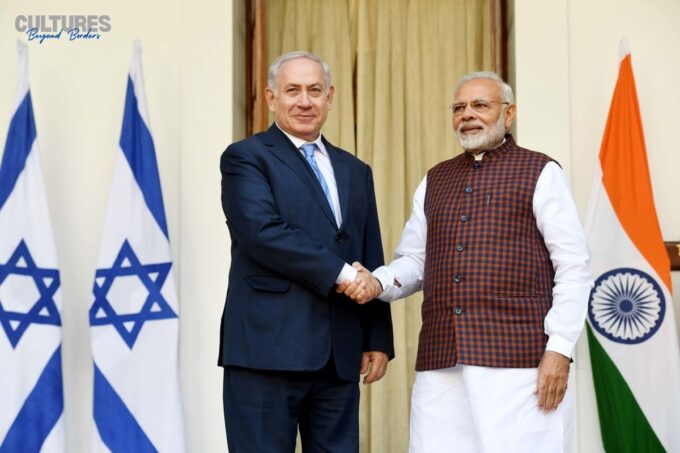
Also Read:- India-Israel: A reliable partnership
At a military cemetery in Bucha, families and residents gathered to honor those who died defending and liberating the town, as well as soldiers who have fallen in the years since. Granite headstones bearing photographs of the deceased, draped with Ukrainian flags, stand as stark reminders of the toll the war has exacted.
President Zelensky, addressing the nation during the anniversary events, framed the conflict as a defining struggle for Ukraine’s sovereignty and survival. He described the invasion as “an attack by a sick state on a sovereign one,” and asserted that the war is driven by Russian President Vladimir Putin. “It is Putin’s war,” Zelensky said. “He is the cause of its beginning and the obstacle to its end. Russia must be put in its place so that there can be real peace.”
Silence Inside Russia
While Ukraine marked the anniversary with ceremonies and speeches, Russia’s state media reportedly made little mention of the milestone. Major television channels continued to refer to the conflict as a “special military operation,” highlighting military achievements rather than acknowledging the war’s duration or cost.
The contrast reflects starkly different narratives inside the two countries. In Ukraine, the anniversary is a day of mourning and resilience. In Russia, public discussion of the war remains tightly controlled.
Accounts from the Russian Front
Adding another dimension to the day’s coverage, filmmaker Ben Steele discussed his documentary, The Zero Line: Inside Russia’s War, which features testimonies from Russian soldiers who fled the front lines. According to Steele, the soldiers described chaotic conditions, brutal discipline, and alleged abuses within Russian ranks.
The UK Ministry of Defence estimates that between 900 and 1,500 Russian soldiers are killed or wounded each day in ongoing fighting. Steele said soldiers reported being sent forward in so-called “meat assaults,” waves of attacks with heavy casualties and minimal regard for human life.
One soldier interviewed for the documentary said, “The opponent is in front of us, but the enemy is our commander behind us,” capturing the fear of punishment from superiors if orders were disobeyed. Some soldiers alleged that commanders executed troops who refused to advance.
Such claims are difficult to independently verify but contribute to growing scrutiny of the human cost on both sides of the conflict.
Winter Hardships and Energy Attacks
Beyond the battlefield, Ukraine has endured one of its harshest winters in years. President Putin has repeatedly targeted energy infrastructure, leaving many civilians without heat and electricity during freezing temperatures.
Maxim Timchenko, head of DTEK, Ukraine’s largest private energy company, described the past months as the worst winter the country’s energy system has faced. He said power stations and transmission lines have been hit by waves of drone and missile attacks, with some facilities targeted by more than 150 drones and 30 missiles within two months.
“These are acts of energy terror,” Timchenko said, describing how strikes have forced apartment temperatures down to just six or seven degrees Celsius in some cases. Repair crews have worked under extreme conditions, performing emergency “black starts” to restore power — restarting stations from scratch after total shutdowns — sometimes dozens of times.
Despite the destruction, Ukrainian engineers have improvised solutions, sourcing equipment from across Europe and transferring transformers between facilities to accelerate repairs. Timchenko appealed for continued international assistance, particularly air defense systems and replacement equipment, warning that preparations for the next winter must begin immediately.
Renewed Sanctions and Support
Meanwhile, the United Kingdom announced new measures during the anniversary events. The British government confirmed it has now sanctioned more than 3,000 individuals, businesses, and vessels under its Russia sanctions regime. The UK foreign secretary also unveiled a fresh package of military, humanitarian, and reconstruction aid for Ukraine.
Other European leaders attending the commemorations are expected to reiterate their countries’ commitments and announce additional support initiatives.
A War Without End in Sight
As Ukraine enters its fifth year of war, the anniversary serves both as a moment of remembrance and a stark reminder that the conflict continues unabated. From the cemeteries of Bucha to the bomb-damaged buildings of Zaporizhzhia, the war’s impact remains visible in daily life.
Though diplomatic efforts and military strategies continue to evolve, the central reality remains unchanged: Ukraine’s struggle for sovereignty persists, and the human cost grows with each passing da








Leave a comment