

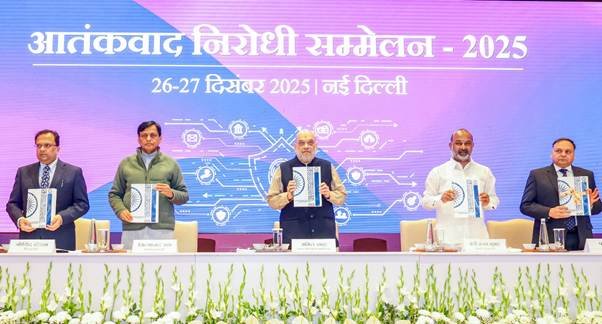
Bangladesh is creating a Frankenstein, as its terror network can harm its own interests, even as India remains vigilant against the strategic challenge arising on its eastern border.
Radicalisation of Bangladesh
Increasing fundamentalism and the rise of terrorism in the country have alarmed the world, especially neighbouring India. The Bangladesh government’s efforts to neutralise terrorism are also just an eyewash for the international community. Most efforts are centred on combating terrorism in the capital, Dhaka, but northern parts of the country remain hotbeds of terrorism. Bangladesh has also almost failed to stop radicalisation, as underground recruitment and terror financing remain frequent.
The major terror outfits in Bangladesh with an anti-India stand include Harkat-ul-Jihad-al-Islami Bangladesh (HuJI-B), Jamaat-ul-Mujahideen Bangladesh (JMB), Ansarullah Bangla Team (ABT), Lashkar-e-Taiba (LeT) affiliates in Bangladesh and Islamic State (IS) affiliates. If these outfits succeed in fomenting trouble in India, it may cause friction between the two countries with long-term implications.
ISI Complicity
For more than a decade and a half, India has been concerned by the increasing ISI presence in Bangladesh. The ISI has been using Bangladesh as a base of operations to fuel unrest in the Northeast. Radical jihadist groups such as HuJI-B are also becoming active in West Bengal and Assam. Illegal immigration of Bangladeshis to West Bengal, Assam, Meghalaya and Tripura, and from Indian neighbouring states to Bangladesh, has allowed terror outfits to recruit several sleeper agents who are spreading their network to Nagaland, Delhi and Maharashtra.
Given the situation, India needs to mitigate the influence of the ISI in Bangladesh, as it is fuelling unrest in the Northeast. India will have to employ both soft and hard power to dismantle the terror machinery.
Terror Financing
The main source of terror financing in Bangladesh is the Hundi system, the equivalent of Hawala, an illegal alternative remittance method. Though banned in Bangladesh, a lot of illegal money flows into the country through this route. The outfits also receive money from expatriate Bangladeshis working in the Middle East, the United Kingdom and elsewhere. Other sources are illegal trade and smuggling.
The India–Bangladesh Border at a Glance
- 4,096.7 km: India–Bangladesh international border
- 30: Indian districts sharing the border with Bangladesh
- 5: Indian states sharing a land border with Bangladesh
- 2,217 km: India–Bangladesh border along West Bengal
- 4: Northeastern states directly bordering Bangladesh
- 3+: major Bangladesh-based Islamist militant organisations with established histories of militancy
India’s Response
India’s response cannot remain confined to border management alone. It must combine intelligence-sharing, stronger border surveillance, financial monitoring and coordinated action against extremist networks with sustained diplomatic engagement with Bangladesh. New Delhi must also work closely with neighbouring states and international partners to prevent Bangladesh from becoming a staging ground for transnational terrorism. Vigilance, however, must be accompanied by engagement to ensure that bilateral ties do not suffer because of extremist elements.












Leave a comment